Miracle Window: Pilgrimage and Healing
Window: nIII
Window nIII was designed to be read from top to bottom rather like a giant page of a graphic novel or comic book. It originally portrayed six miracles. Today, five remain. Skipping over the three Victorian replacement panels now found at the very top of the window, the five stories are those of Goditha of Hayes, Ralph of Longueville, the two sisters from Boxley, Eilward of Westoning, and Hugh of Jervaulx. These were all real people who lived in the late twelfth century. We know their names and details about their illnesses from written accounts in Benedict of Peterborough’s collection of Becket’s miracles.
The window shows how Goditha, Ralph, the two Boxley sisters, Eilward, and Hugh recover from dropsy (extreme water retention), leprosy, lameness, blindness and castration, and a near fatal illness. It looks as if the glaziers deliberately selected these miracles to display Becket’s ability to cure a wide range of problems and illnesses.
It is unfortunate that we have lost the sixth story portrayed in the window, but it is likely it showed a pilgrim suffering from yet another type of illness or disability.
Window nIII is especially rich with images of pilgrimage. With the exception of Hugh, who, as a Cistercian monk, would have had less opportunity to travel, all the others are shown as pilgrims travelling to and/or from Canterbury.
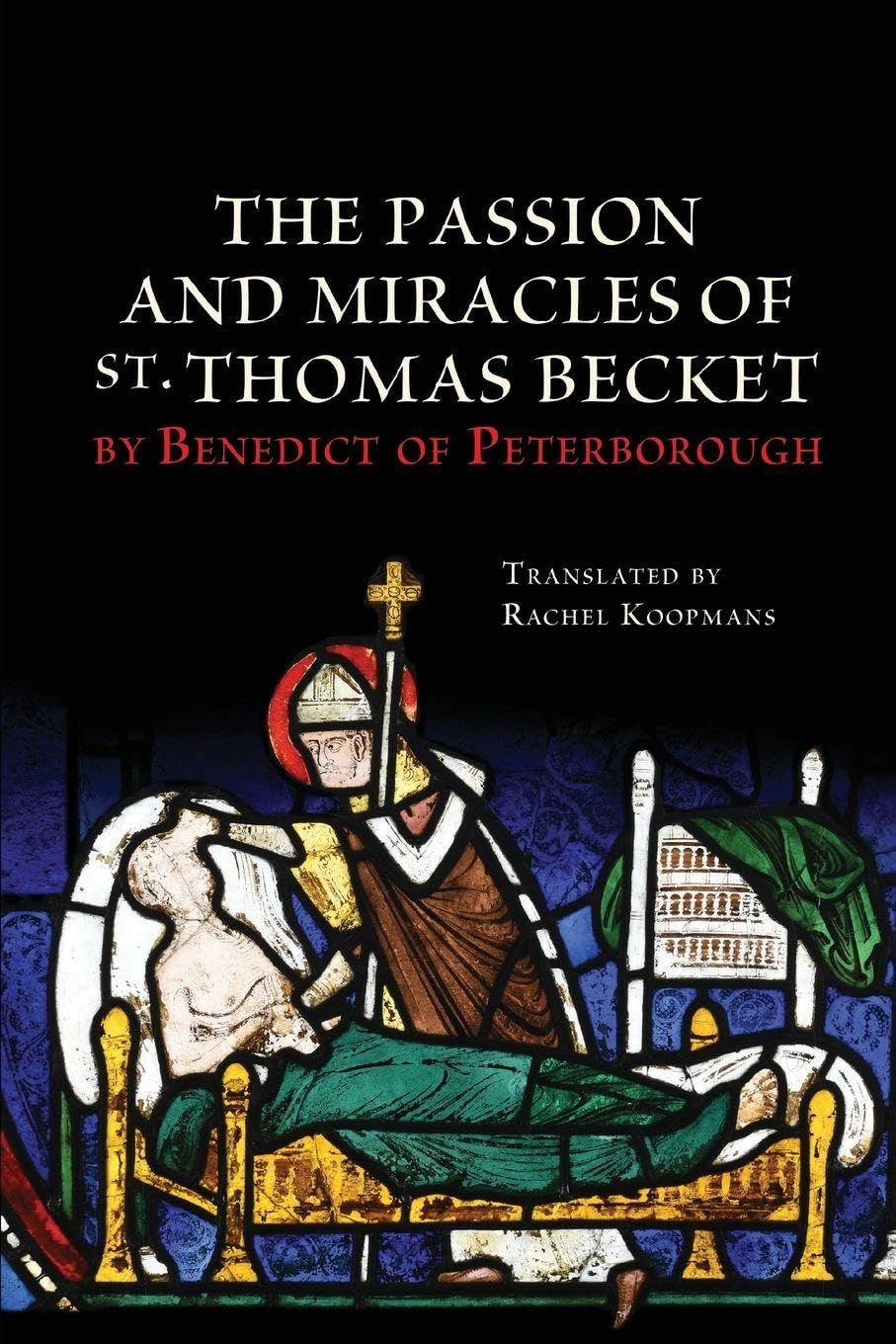
Thomas Becket himself is pictured four times in the window, twice in the Lame Sisters story and twice in Eilward’s story. In all four cases, he appears in a vision. The image pictured here, from the central panel of the Lame Sisters’ story, shows Becket standing over one of the sleeping sisters. His head, face, figure and crozier are all perfectly preserved. This is the sole image of Thomas Becket to survive unscathed, with no modern restorations, from the medieval cathedral.
The window shows how Goditha, Ralph, the two Boxley sisters, Eilward, and Hugh recover from dropsy (extreme water retention), leprosy, lameness, blindness and castration, and a near fatal illness. It looks as if the glaziers deliberately selected these miracles to display Becket’s ability to cure a wide range of problems and illnesses.
It is unfortunate that we have lost the sixth story portrayed in the window, but it is likely it showed a pilgrim suffering from yet another type of illness or disability.
Window nIII is especially rich with images of pilgrimage. With the exception of Hugh, who, as a Cistercian monk, would have had less opportunity to travel, all the others are shown as pilgrims travelling to and/or from Canterbury.
Thomas Becket himself is pictured four times in the window, twice in the Lame Sisters story and twice in Eilward’s story. In all four cases, he appears in a vision. The image pictured here, from the central panel of the Lame Sisters’ story, shows Becket standing over one of the sleeping sisters. His head, face, figure and crozier are all perfectly preserved. This is the sole image of Thomas Becket to survive unscathed, with no modern restorations, from the medieval cathedral.
Rearrangement
Information here, with further details in a linked article.British Museum exhibition
Information here, with further details in a linked article?Window details
- CVMA identificationnIII
- Original workshop/artistCanterbury
- Creation dateca.1213-1220
- Known conservations1857, 1989, 2020-24
Source text
Benedict of Peterborough, Miracles of St Thomas Becket
Stories from 1171-73